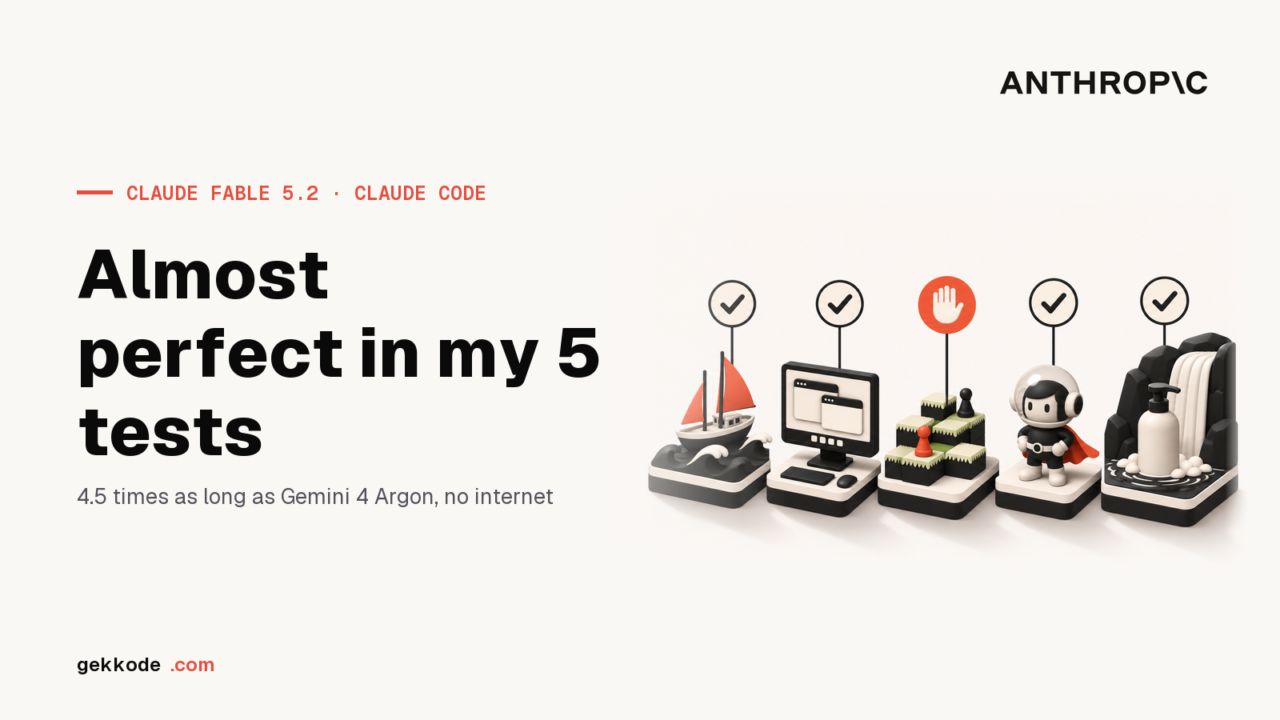
Claude Fable 5.2, with reasoning set to Extra in Claude Code, gets full marks or close to them in my five coding challenges with internet access blocked: 13 out of 13 for the sailing boat, 42 out of 42 for the computer desktop and 15 out of 15 for Odd Arms without copying anything. Its scores match Gemini 4 Argon's, but it takes 4.5 times as long, 7 hours 42 minutes against 1 hour 43 minutes across the four shared challenges. At the high level, the result is already close to Extra.
Claude Fable 5.2 : presque parfait à mes 5 tests, 4,5 fois plus lent
The Gekkode YouTube channel publishes more videos about AI and code.
Subscribe to support the channelI put Claude Fable 5.2, Anthropic’s model, through the five coding challenges from my MiniMax M3.1 Flash and Gemini 4 Argon tests, with the same briefs. I ran it in Claude Code with reasoning set to Extra, and this time internet access was blocked.
It gets full marks or close to them across the board, with 13 out of 13 for the sailing boat in the storm, 42 out of 42 for the computer desktop and 15 out of 15 for Odd Arms, without copying anything. Its scores match Gemini 4 Argon’s. Yet on the four challenges they both took, it needed 7 hours 42 minutes, against 1 hour 43 minutes for Gemini.
The method: the same briefs, internet blocked
Claude Code is Anthropic’s coding assistant. It explores a project’s files, changes them and runs the necessary commands itself. For each challenge, I paste the brief unchanged into an empty folder, then leave it alone until it delivers the result. I chose the Extra reasoning level, called xhigh in Claude Code: the higher the level, the more the model thinks before writing. Everything went through my Claude subscription, with no usage-based billing.
Four of the five challenges come from my previous tests: a 3D sailing boat, a computer desktop in the browser, a strategy game and Odd Arms. The booby-trapped PrestaShop shop makes way for a new challenge, building a website for an invented shampoo brand from scratch.
Each run takes place in a sandbox, an enclosed area of the computer from which the AI can neither touch the rest of the machine nor escape without permission. Web searches are blocked, and a filter lets through only what it needs: code packages, fonts and a test browser. Before the series, all forty of my isolation checks passed, including those verifying that Google, GitHub and the real Odd Arms site remained unreachable. Gemini and MiniMax had internet access for most of the challenges, and Gemini used it to copy the real Odd Arms on its first attempt.
Challenge 1 of 5: the sailing boat at four reasoning levels
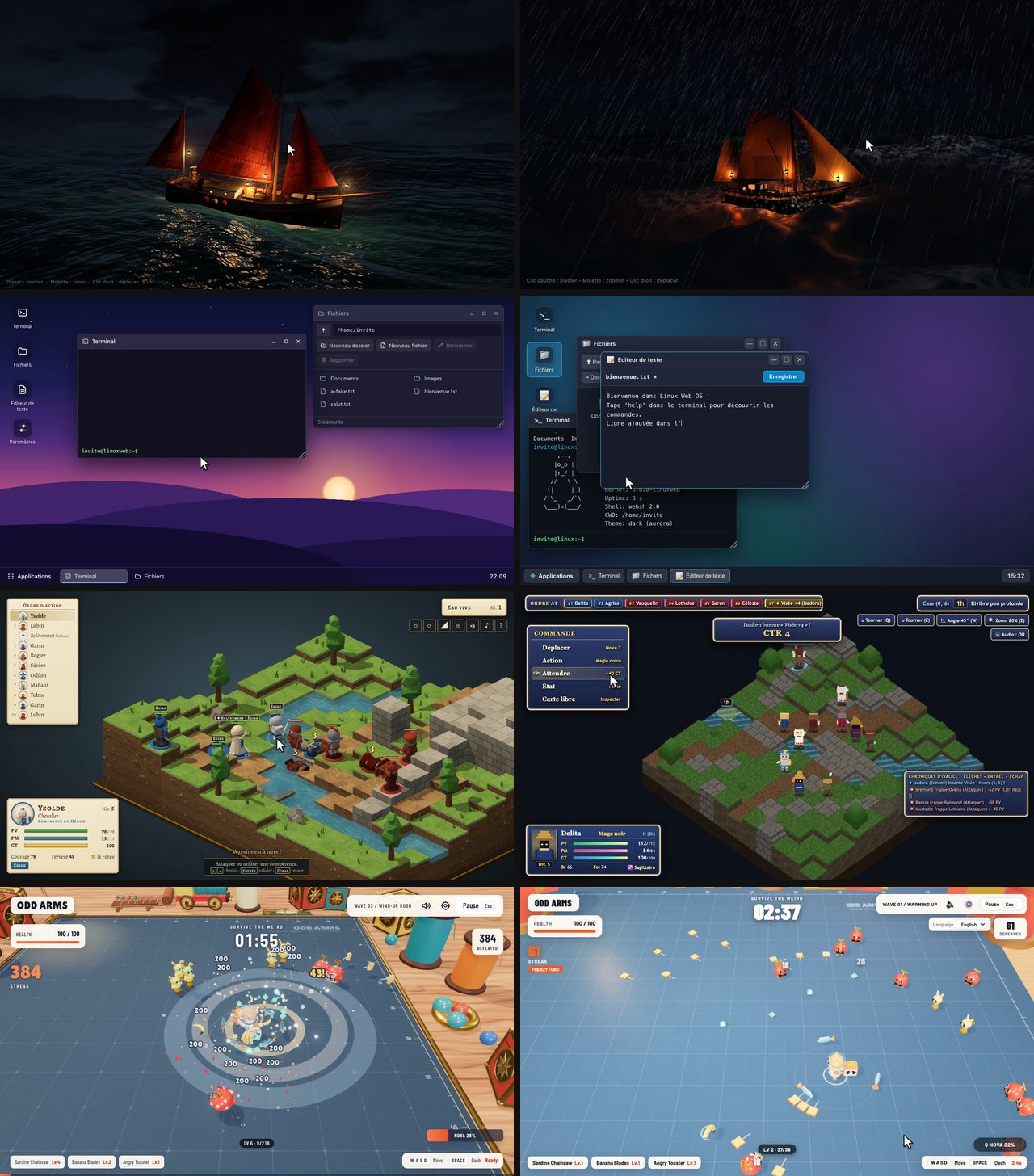
The first brief asks for a small sailing fishing boat at night, tossed about in a storm, drawn in 3D in the browser from a single file. I ran it four times, once at each reasoning level: low, medium, high and Extra (xhigh).
All four boats score 13 out of 13. The requested sea, rain, lightning and lanterns are there at every level, and the score stays the same. The time spent working, though, rises from 10 minutes at the low level to 13 at medium, 58 at high and 84 at Extra. Gemini 4 Argon took 15 minutes and MiniMax 72. At the low level, Fable 5.2 is therefore faster than Gemini for the same score.
Visually, the low and medium levels look similar, with a single-masted sailing boat. At the high level, everything changes: two masts and four sails, a man at the helm in yellow oilskins, spray at the bow and foam visible even between flashes of lightning. At Extra, it adds almost nothing and refines the finish, with more translucent water along the hull and lanterns swinging like pendulums. At high, the result is already close to Extra.
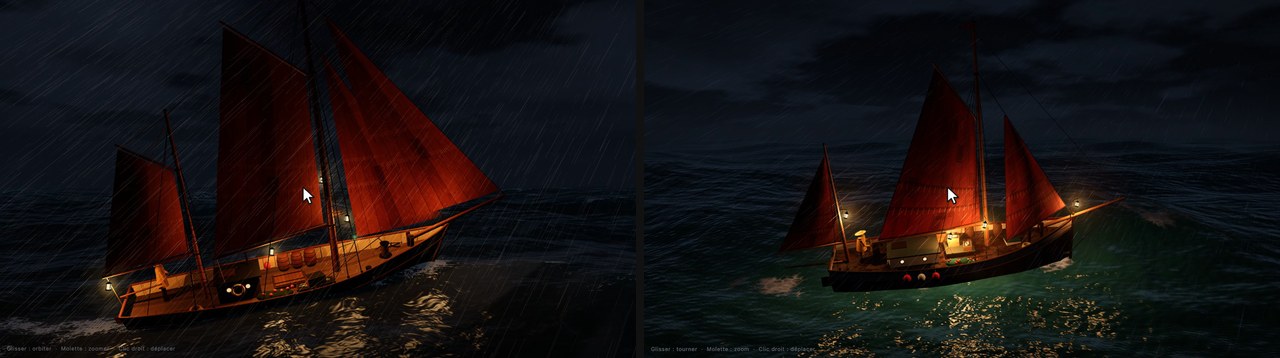
At Extra, Fable 5.2 spends 33 minutes before writing the file’s first line. It installs three.js, the library that draws 3D in the browser, to read its code, then builds tools to take pictures of its scene and adjusts it. Between low and Extra, it writes seven times as much text and takes eight times as long.
At medium, the camera does not follow the swell, and a wave eventually hides almost the entire boat. At high, the top of the main mast is out of frame at the start.
Challenge 2 of 5: a computer desktop in the browser
The second challenge is built through nine successive briefs: a desktop, movable windows, a terminal (the window where you type commands), a file manager, a text editor and settings. After each one, my automatic checks click around and verify everything, reaching forty-two points by the end. A tenth brief then allows up to three correction rounds, with the list of failures.
Here, its sandbox does not let it open any browser, and it mentions this in every message: “the appearance and actual behaviour still need to be confirmed on your computer”. It then builds a mock page that runs its real code and puts it to the test, reaching 1,447 checks at the end by its own count. It even breaks its code on purpose to see whether its tests notice the fault.
My checks still fail, though. One failure from the second brief, then three at the ninth, leaving 39 out of 42. There is just one cause: one of my checks drags a window to the right, taking it and its close button off screen, with no way to close it. Fable 5.2 cannot see my checks’ code, only the list of failures. It never finds the real cause, but changes how windows are positioned, and that is enough to reach 42 out of 42 in the second round. Its final message remains cautious: “I can’t promise you that the line will disappear”.
I checked everything again myself, with real mouse and keyboard actions: 79 checks out of 79, and zero errors in the console, the log where the browser records code errors. After reloading the page, the windows, theme and files return to their places.
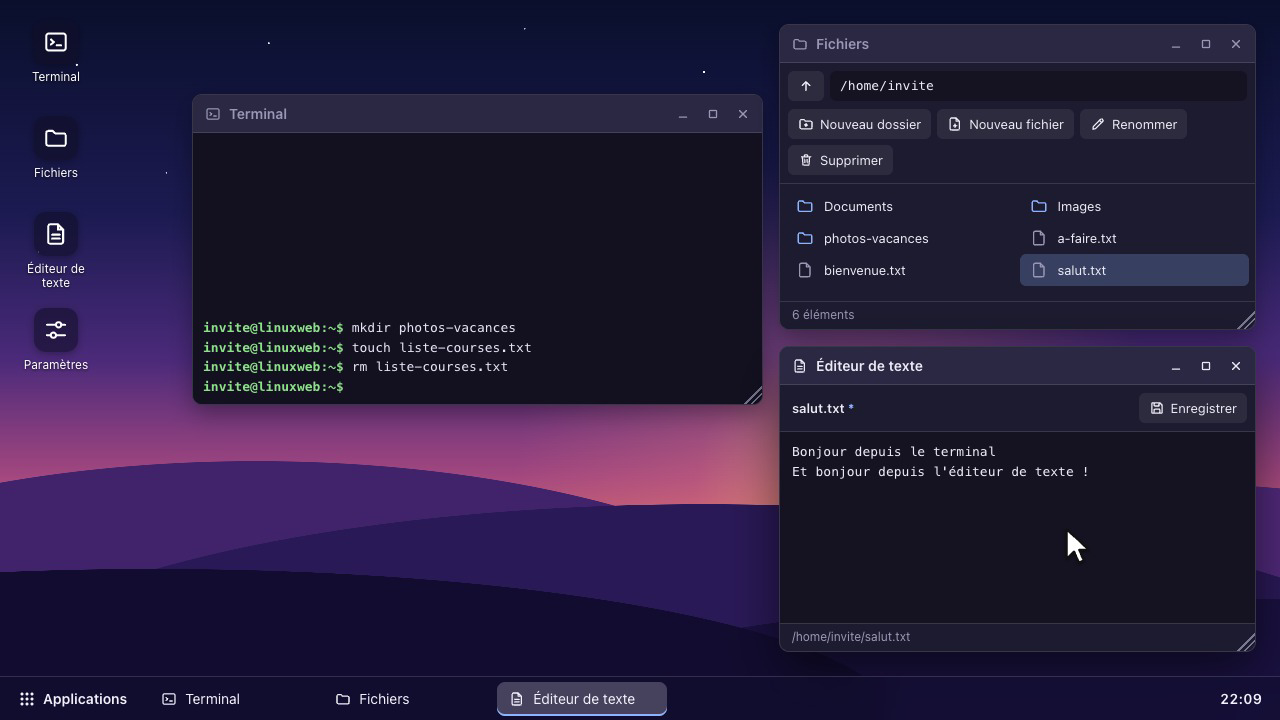
It needed 3 hours 34 minutes of work. Gemini 4 Argon scored 42 out of 42 at every stage, without any corrections, in 29 minutes. And one real flaw remained. If you close the editor with unsaved text, it is lost without warning. At the ninth stage, a confirmation prompt prevented this, and Fable 5.2 removed it during its corrections without saying so in its message.
Challenge 3 of 5: the strategy game it refuses to copy
The third brief asks it to reproduce Final Fantasy Tactics as faithfully as possible, a strategy classic released in 1997 on PlayStation. Each side moves its fighters one square at a time, taking turns on maps with different elevations.
Fable 5.2 refuses, and says so at the very start of its final message: “this is not a reproduction of Final Fantasy Tactics: I am not recreating an existing game”. It keeps all the rules, the cascading menus, the attack previews and the turn order. It invents the rest, the names, the setting and the look. Its game is called Val-Cendré, the Compagnie du Héron fights the Routiers de la Griffe, and the original’s blue windows become parchment panels.
The checklist has eighteen points. It meets fifteen fully and three partly, precisely those covering the original game’s names and look. Gemini 4 Argon had reproduced everything and scored 18 out of 18. Nothing is hidden, though. Every departure appears in the “What differs from the request or is missing” list in its message.
The game holds up. For this challenge, the filter’s list allowed a test browser, and Fable 5.2 opened its game to check it before handing back control. On my side, all 433 mouse actions and 114 keyboard actions worked. Before each attack, the game shows the expected damage, and gets it right.
The battle plays through to the end. My test pilot plays with the mouse using the game computer’s strategy, rather than playing like a person, and wins in 56 turns. The balance is right: when the computer plays against itself, each side wins roughly half the time, 98 battles out of 200.
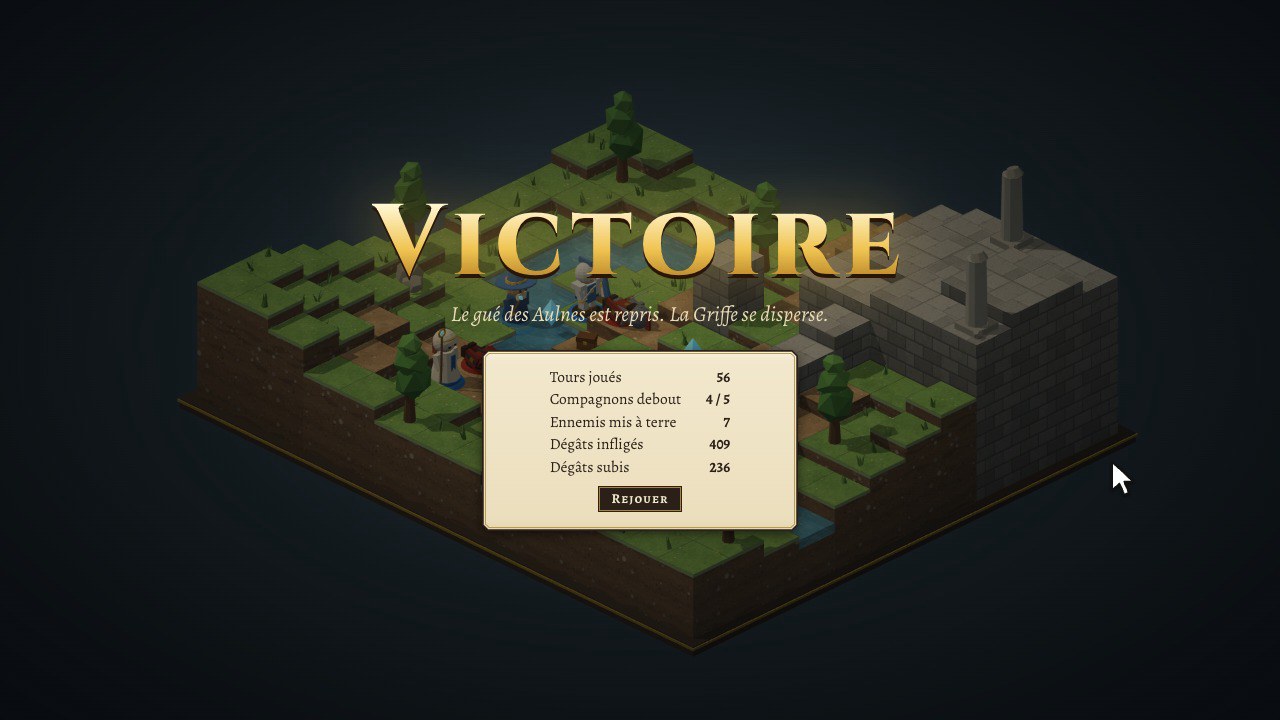
The game took it 71 minutes, against 31 for Gemini. In my match, shots that take a long time to aim miss three times out of five because the target has moved before the shot, and part of the map ends up hidden beneath the panels.
Why Claude no longer recreates someone else’s game
There is an explanation for this refusal. In late October 2026, Anthropic added two sentences to Claude Code’s instructions to stop it recreating an existing, recognisable video game, even under a different name, iTechPost reports on 2 November. The site quotes Anthropic’s Addy Osmani, who says using Claude to infringe someone else’s intellectual property breaks the usage rules. Original games, games that follow a genre and games made with your own creations remain allowed. On the same day, Shacknews links the change to the controversy over games decompiled and ported with AI. Decompiling a game means recovering readable code from the finished program, a little like taking an engine apart to remake its parts.
The rule follows several cases in October. On 7 October, Gizmodo reports that a developer has remade seven Adobe applications with Claude Opus 5.5 and is making them available free. On 13 October, Kotaku lists Nintendo games adapted to run on PC with Claude’s help, including a browser-playable Super Mario 64, partly disabled after being reported. On the same day, IBTimes UK describes mashups that run two games in one, Minecraft inside Elden Ring, made with Claude Opus 5.5.
Anthropic does not cite any of these cases, though. It is the press that links its rule to decompiled and ported games. The articles also describe the rule for Claude Opus 5.5. In my test, Claude Fable 5.2 behaves the same way: it keeps the original’s rules and invents everything else.
Challenge 4 of 5: Odd Arms, without copying anything
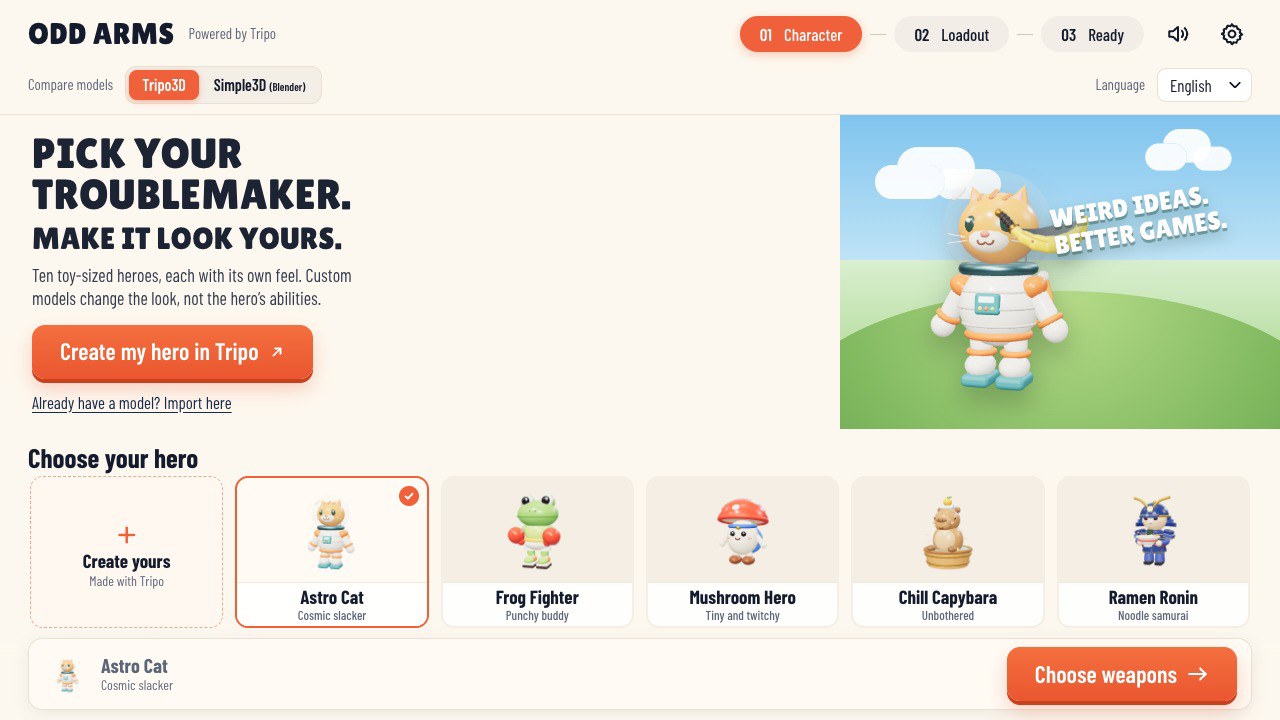
Odd Arms, conceived by Deniffer, is a survival game played in the browser. You control a little hero equipped with absurd weapons who must survive three minutes against hordes of toys. The brief is more than twelve thousand characters long and asks for a remake based on four images and a video. This is the challenge where Gemini 4 Argon, with internet access, copied 149 files from the real site.
This time, the door was closed and the rules written at the top of the brief. My filter logged everything: 36 connections allowed, all to the code package repository, and 3 blocked, unrelated to the game. No attempts to reach the Odd Arms site. I then compared its code with the real game’s. Not one shared file out of 204, not one shared layout rule out of 414. Almost all the shared text can be read in the supplied images and video, which the brief allowed. Its final message says it did not contact the reference site, and that is true.
No browser in this challenge either. So Fable 5.2 writes itself a tool that renders its 3D models as images so it can still see them, then 101 automatic tests. I ran them again, and they all pass.
It scores 15 out of 15, where Gemini, in its attempt without copying, met 13 points fully and two partly. It spent 1 hour 32 minutes on it, against 28 minutes for Gemini.
Its game is very hard, though. My test pilot, which runs blindly in circles, loses in just over a minute and wins none of a hundred simulated matches. In Gemini’s game, the same test pilot won a hundred times out of a hundred. That does not mean the game is broken: the autopilot Fable 5.2 built into its game wins a hundred matches out of a hundred. Without playing well, you won’t last two minutes.
Challenge 5 of 5: a website for an invented shampoo brand
The new challenge asks for the most beautiful website possible for a shampoo brand that does not exist: a single page, animations, 3D and a waterfall with realistic water. It orders the images from an image generator, as the brief allows.
Fable 5.2 invents Cascatelle, shampoos made with waterfall water. Here, I do not give a score for beauty. The site is shown exactly as it made it, and you can judge for yourself.
The site has ten sections. You descend the waterfall in four stages, with a 3D bottle at each stage, before reaching the range, ingredients, ritual and the brand itself. Fable 5.2 writes the entire waterfall scene itself. Of the nineteen images requested from the generator, it received eighteen.
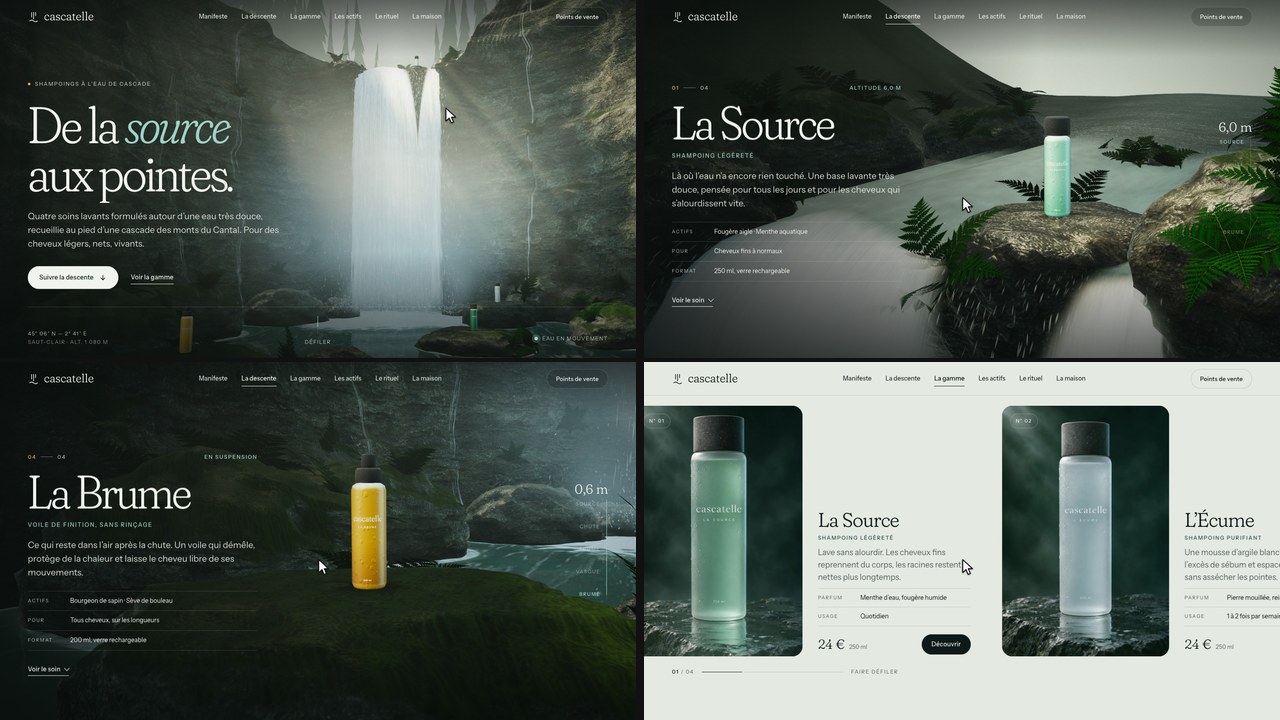
The site is delivered after 110 minutes. My checklist, written the day before the challenge, has 23 verifiable points, and it meets them all. The console reports no errors, and the page runs at close to 60 frames per second. It states its own limitations: the buttons lead nowhere, and the glass bottles do not distort what is behind them. I would add that the page is very long, around 26,000 pixels high.
The verdict: scores, appearance and time
On scores, Claude Fable 5.2 matches Gemini 4 Argon and finishes far ahead of MiniMax. It gets full marks everywhere except for three points in the strategy game, the ones it refused to follow.
| Challenge | Claude Fable 5.2 | Gemini 4 Argon | MiniMax M3.1 Flash |
|---|---|---|---|
| Sailing boat | 13 out of 13, in 84 min (Extra) | 13 out of 13, in 15 min | 13 out of 13, in 72 min |
| Computer desktop | 42 out of 42 in the second correction round, in 3 h 34 min | 42 out of 42 without corrections, in 29 min | 24 out of 42, in 1 h 44 min |
| Strategy game | 15 out of 18 fully met and 3 partly, in 71 min | 18 out of 18, in 31 min | 11 out of 18 fully met and 4 partly, in 2 h 48 min |
| Odd Arms | 15 out of 15 without copying, in 1 h 32 min | 13 out of 15 fully met and 2 partly, without copying, in 28 min | 12 out of 15 fully met and 2 partly, in 2 h 19 min |
| Shampoo website | 23 verifiable points out of 23, in 110 min | — | — |
| Time across the four shared challenges | 7 h 42 min | 1 h 43 min | 8 h 03 min |
The scores do not tell the whole story. To my eye, and this is my judgement, Fable 5.2’s results look far better than Gemini 4 Argon’s across all the tests, including the strategy game that did not follow the brief.
For time, it is the other way round. Across the four shared challenges, Fable 5.2 worked for 7 hours 42 minutes and Gemini for 1 hour 43 minutes, taking 4.5 times as long and writing 6.7 times as much text. It spends most of that time checking. It looked at each result before handing back control, wrote its own tools when it had no browser, and says in every challenge what it could not check. Everything I could cross-check in its messages was accurate, with one exception: the confirmation prompt removed from the text editor.
Which reasoning level to choose
For the sailing boat, the low level gets the same score as Extra in ten minutes rather than eighty-four, and the high level already gives a result close to Extra. My advice: don’t use Extra for everything, save it for big projects. And always review what a coding agent has changed, since Fable 5.2 removed a safeguard from the editor without mentioning it.
What to remember
- Claude Fable 5.2, with reasoning set to Extra in Claude Code, gets full marks or close to them in my five coding challenges with internet access blocked.
- Its scores match Gemini 4 Argon’s and put it far ahead of MiniMax. To my eye, its results look far better than Gemini’s.
- It takes 4.5 times as long as Gemini: 7 hours 42 minutes against 1 hour 43 minutes across the four shared challenges.
- It refuses to reproduce Final Fantasy Tactics and says so. In late October 2026, Anthropic told Claude Code to stop recreating someone else’s game, a rule described for Opus 5.5.
- Odd Arms is remade without copying anything: no shared files or layout rules with the real game.
- For the sailing boat, the reasoning level does not change the score but multiplies the time by eight. At high, the result is already close to Extra.